
Primary Colors
No open-access works for Primary Colors are in the index yet. They will appear here as more collections are indexed.
About Primary Colors
Red, yellow and blue became established as painters' primaries in the 17th and 18th centuries, and around 1710 the printmaker Jacob Christoph Le Blon used them to print full-colour images from three plates. Light and modern printing use other sets (red, green and blue for screens; cyan, magenta and yellow for ink), but the painter's triad kept its force as a symbol of elementary colour.
De Stijl turned it into a programme. From around 1920 Piet Mondrian limited his paintings to red, yellow and blue with black, white and grey, and Bart van der Leck and the furniture of Gerrit Rietveld used the same scheme. Ilya Bolotowsky and Fritz Glarner carried it to New York, and Alexander Calder painted many mobiles in primaries. Pop artists later took the triad from comics and packaging. Look for unmixed, flat colour, often separated by black lines or white space.
The makers
Related artists.
Psychedelic
Radiating Lines
Raw versus Finished

Rough
Scattered Composition
Single Object
Slender
Smooth Surface
Sparse
Stained Glass Effect

Striped
Symmetrical
Tangled Forms
Viscous Forms
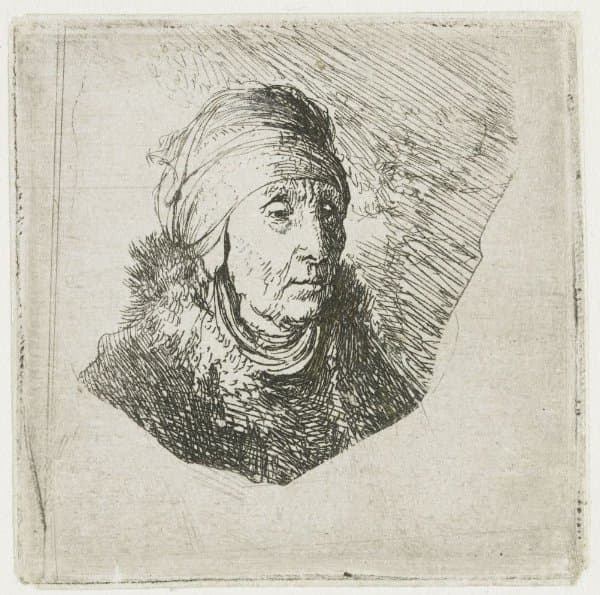
Wrapped
Abstract Illusionism
Allover Composition
Angular
Asymmetrical
Balance
Biomorphic
