
CategoriesMedium and Techniques
Hatching
Shading built from closely spaced parallel lines, and from crossing sets of lines, in drawing, engraving and some kinds of painting.
1 work
About
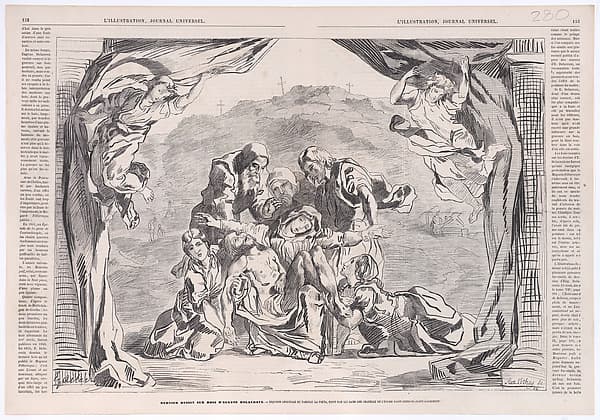
Hatching builds tone from rows of closely spaced parallel lines: the closer and heavier the lines, the darker the area. Cross-hatching lays a second set, or more, at an angle across the first, and lines can curve to follow the swell of a form.
It matters most wherever an artist cannot blend. Egg tempera painters of the 14th and 15th centuries modelled flesh with fine hatched strokes because the paint dried almost at once. Engravers depended on it: Albrecht Dürer's Melencolia I (1514) achieves silvery greys and deep shadows from line alone. Leonardo da Vinci, who was left-handed, shaded with strokes slanting from upper left to lower right, a clue used in attributing his drawings. Vincent van Gogh's reed-pen drawings turn hatching into texture and energy, and in the 1970s Jasper Johns made whole abstract paintings from clusters of hatch marks.
More in Medium and Techniques

History Painting
Hyperrealism
Illustration
Imitated Material
Immersive
Impasto
Installation
Intaglio
Intentionally Exposed Canvas
Interactive
Intricately Sculpted
Kinetic Sculpture
Large-Scale Painting
Large-Scale Photography
Large-Scale Sculpture

Light Art
Lightbox
Long Distance and Deep Distance
Long Exposure
Mail Art
Manipulated Photography
