
Line, Form, and Color
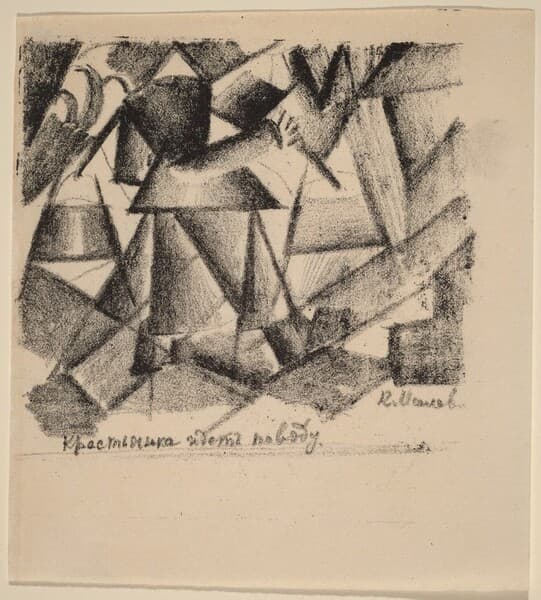
Non-figurative work built from the basic visual elements of line, shape and colour.
162 works · 10 related artists
About
Line, form and colour are the basic elements of visual art, and in abstraction they carry the whole work without describing anything. Ornament had used them for millennia, but early 20th-century painters made them the subject. Hilma af Klint painted spirals, petals and bands of pure hue from 1906, Sonia Delaunay set discs of contrasting colour spinning in Electric Prisms (1914), and Paul Klee described drawing as taking a line for a walk.
Each element has had its champions. Jackson Pollock let poured line cover the whole surface in Autumn Rhythm (Number 30) (1950). Josef Albers spent more than two decades on Homage to the Square, nesting squares to show how colours change one another. Frank Stella's black stripe paintings of 1958–60 reduced form to the shape of the canvas and the path of the brush, and Bridget Riley's Movement in Squares (1961) makes a flat grid seem to buckle.
Related artists
More in Subject Matter

Love
Machines
Madonna and Child
Manga
Masculinity
Math
Migration
Modes of Transportation
Mortality
Mourning and Commemoration

Movement
Mutated Bodies
Mysticism, Shamanism, and the Occult
Mythology and Religion
Narrative
Natural History

Nature
Nautical
Nostalgia
