
CategoriesStyles and Movements
Post-Impressionism
A retrospective label for French painters of the 1880s and 1890s, among them Cézanne, Van Gogh and Gauguin, who moved beyond Impressionism.
2,085 works · 10 related artists
About
The label came late. In 1910 the English critic Roger Fry needed a title for a London exhibition of recent French painting and chose Manet and the Post-Impressionists, grouping artists who had never worked as a movement. What linked them was a sense, from the mid-1880s, that recording fleeting light was not enough.
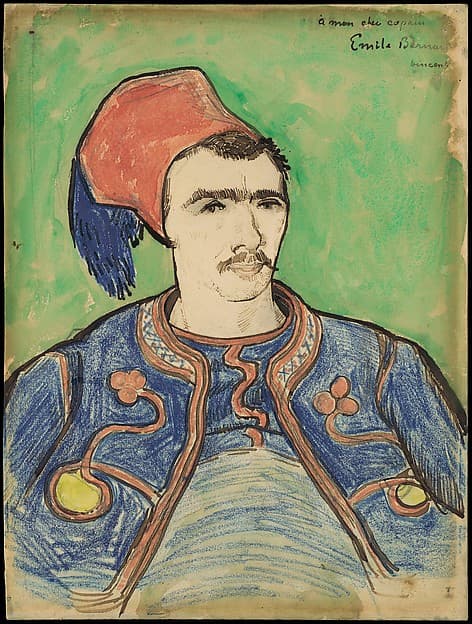
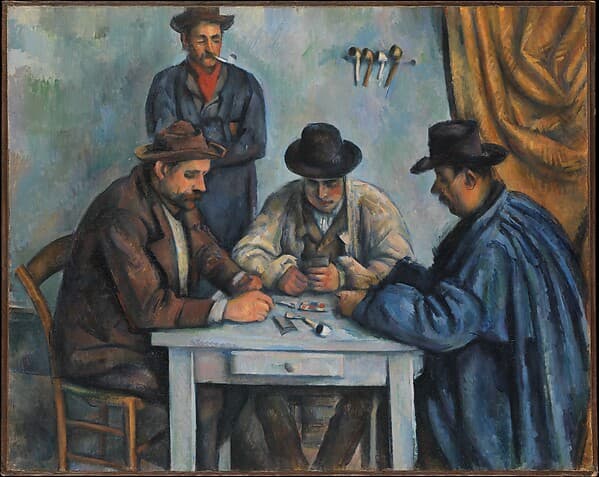
Each found a different way forward. Paul Cézanne rebuilt nature from blocks of colour laid in patient, parallel strokes, returning repeatedly to Mont Sainte-Victoire. Vincent van Gogh used heavy, directional brushwork and charged colour to carry feeling, as in The Starry Night (1889). Paul Gauguin, working in Brittany and later Tahiti, flattened forms inside dark outlines in Vision after the Sermon (1888). Georges Seurat systematised colour, Henri de Toulouse-Lautrec drew Montmartre's nightlife with poster-like economy, and the Nabis, including Édouard Vuillard, turned interiors into patterned surfaces. Fauvism, Expressionism and Cubism all grew from these experiments.
Related artists
More in Styles and Movements
Post-Internet Art
Post-Painterly Abstraction
Post-War American Art
Post-War European Art
Post-World War I European Classicism
Post-World War II School of Paris
Postminimalism
Pre-Raphaelites
Pre-World War II School of Paris
Precisionism
Process Art
Progressive Artists' Movement
Purism
Relational Aesthetics
Renaissance
Rinpa School
Rococo Art and Design
