16th Century
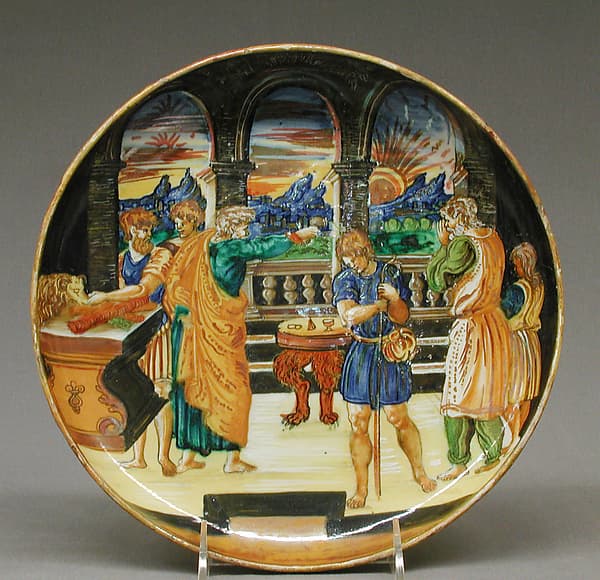
Art made between 1500 and 1599: the High Renaissance, Venetian colour, Northern printmaking, Mannerism and the great Islamic empires.
665 works · 10 related artists
About
The century opened in Rome with a burst of large-scale ambition: Michelangelo painted the Sistine Chapel ceiling (1508–12) while Raphael worked on the School of Athens (1509–11). In Venice, Giorgione and then Titian built pictures from colour and atmosphere. North of the Alps, Albrecht Dürer made engraving a vehicle for dense ideas in Melencolia I (1514), and Pieter Bruegel the Elder later turned peasant life and the seasons into panoramic scenes such as Hunters in the Snow (1565).
Religious conflict reshaped patronage after Martin Luther's protest of 1517, stripping images from many Protestant churches and pushing Catholic art towards clarity and emotional force. Mannerist painters like Parmigianino stretched proportions for elegance, and El Greco in Toledo carried that restlessness into visionary altarpieces. Beyond Europe, the Mughal, Safavid and Ottoman courts were at their height, Kano Eitoku covered Japanese castle interiors with gold screens, and Indigenous artists in New Spain adapted featherwork to Christian images.